
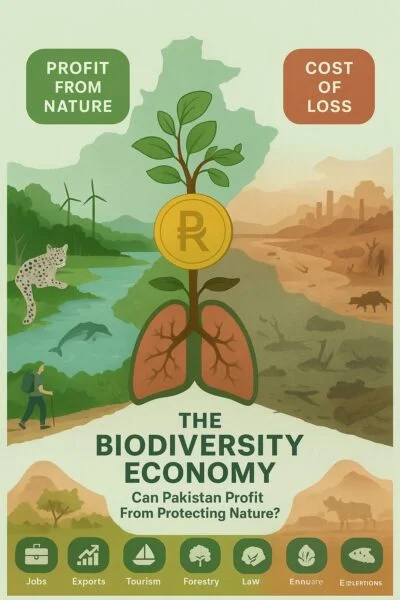
Introduction: Nature’s Untapped Wealth
Pakistan’s diverse landscapes hold immense value. From the Himalayas to the Arabian Sea, they teem with life. Yet, rapid development threatens this richness. The biodiversity economy offers a path forward. It turns protection into profit. This post examines how Pakistan can benefit. It highlights conservation’s economic gains. New tools like nature-positive finance emerge as key.
Why Biodiversity Matters for Economies
Biodiversity is more than nature’s beauty. It is an economic resource that supports food, water, medicine, and livelihoods worldwide. Globally, the biodiversity economy is expanding as countries link conservation with profit, job creation, and sustainable development. Pakistan, rich in ecosystems and species, can turn biodiversity into economic strength if it invests wisely in nature-based solutions.
Pakistan’s Biodiversity: A Hidden Asset
Pakistan boasts over 6,000 plant species. It shelters 195 mammals and 668 birds. Mangroves along the coast store carbon effectively. Forests cover 4.8 million hectares. These ecosystems provide services worth billions. They support agriculture and tourism. However, deforestation claims 27,000 hectares yearly. Pollution degrades habitats. Climate change worsens the loss. Protecting biodiversity preserves this wealth. It also unlocks economic potential.
Pakistan’s Potential in the Biodiversity Economy
Biodiversity and Ecotourism Opportunities
Pakistan’s mountains, wetlands, and deserts provide vast potential for biodiversity-driven ecotourism.
Eco-lodges, wildlife parks, and guided tours could attract global visitors seeking sustainable travel experiences.
By protecting biodiversity hotspots like Hunza and Indus wetlands, Pakistan can generate jobs and tourism revenue.
Biodiversity and Sustainable Agriculture
Sustainable agriculture protects biodiversity and boosts productivity. Organic farming reduces pesticide use, protects pollinators, and improves soil health.
Biodiversity-based farming practices can enhance food security while opening export markets for organic produce.
Biodiversity in Forestry and Fisheries
Community forestry programs can protect biodiversity while generating timber and non-timber products sustainably.
Pakistan’s fisheries, if managed with biodiversity-friendly policies, can expand exports and support coastal livelihoods.
Biodiversity ensures long-term productivity in these sectors.
Biodiversity and Green Finance
Green bonds and biodiversity funds are rising worldwide. Pakistan can tap global climate finance to support conservation projects.
Banks and investors now consider biodiversity risks in their portfolios, creating opportunities for Pakistan’s biodiversity economy.
Economic Benefits of Biodiversity Conservation
Conservation drives growth. Ecotourism generates $1 billion annually in Pakistan. Forests yield timber worth $500 million. Mangroves protect coasts from storms. They save millions in damages. Biodiversity supports fisheries too. It employs thousands. Sustainable practices boost livelihoods. They reduce poverty in rural areas.
Opportunities for Jobs, Exports, and Rural Development
Investing in biodiversity creates jobs in tourism, agriculture, forestry, and fisheries.Biodiversity-friendly products such as organic foods, medicinal plants, and handicrafts have growing export potential.
Rural communities benefit most, as biodiversity investments improve livelihoods and reduce poverty.
Case Studies Highlighting Biodiversity Success
- Costa Rica: Biodiversity-based ecotourism created jobs, reduced poverty, and protected forests.
- Bhutan: Biodiversity conservation supports eco-tourism and renewable energy, making the country carbon negative.
- Kenya: Community wildlife conservancies generate income while protecting biodiversity.
These examples prove biodiversity can directly support economic growth. Pakistan can replicate such models.
Challenges: Loss and Its Costs
Deforestation destroys habitats. Urban expansion fragments ecosystems. Pollution contaminates rivers. Climate change accelerates extinction risks. Pakistan loses $3.3 billion yearly to environmental degradation. Biodiversity decline threatens food security. It weakens resilience to disasters.
Emerging Opportunity: Nature-Positive Finance
Nature-positive finance presents a fresh chance. Blue bonds fund ocean conservation. They attract investors for sustainable projects. Biodiversity credits reward protection efforts. They create markets for ecosystem services. Pakistan can tap this. Credits could finance mangrove restoration. Blue bonds might support coastal communities. Global markets grow rapidly. Biodiversity credits reach billions by 2030. Indigenous groups lead similar initiatives. Pakistan’s untapped potential shines here.
Global Trends in the Biodiversity Economy
Many nations recognize biodiversity as an economic driver. Ecotourism, green finance, and sustainable agriculture are billion-dollar industries worldwide.Costa Rica earns nearly 6% of GDP from ecotourism, showing how biodiversity generates wealth while protecting ecosystems.China promotes biodiversity through green finance, investing in reforestation and renewable energy. This approach aligns conservation with industrial growth.These examples show biodiversity can drive economic growth, attract foreign investment, and reduce poverty when managed sustainably.
Global Trends and Pakistan’s Path
Worldwide, biodiversity finance hits $10 trillion by 2030. Nature bonds unlock funds for conservation. Pakistan can follow suit. Invest in blue economy projects. Develop biodiversity credit markets. Partner with international bodies. This creates jobs. It builds resilience.
Risks of Ignoring Biodiversity in Pakistan
Biodiversity loss in Pakistan threatens agriculture, fisheries, and tourism. Habitat destruction and climate change are accelerating this decline.The World Bank warns that natural capital degradation could cut Pakistan’s GDP by 9% by 2030.Loss of pollinators reduces crop yields. Overfishing depletes seafood stocks. Deforestation worsens floods, costing billions in damages.Ignoring biodiversity is not an option. The economic risks far outweigh the costs of conservation.
Actionable Recommendations for Pakistan
Strengthen biodiversity laws and ensure enforcement
Integrate biodiversity into national economic planning.
Promote biodiversity-focused ecotourism in northern and coastal regions.
Support farmers with biodiversity-friendly agricultural subsidies.
Expand community forestry and sustainable fisheries programs.
Launch biodiversity bonds and access global green finance markets.
My Opinion: A Profitable Future Through Biodiversity
Biodiversity is not just an environmental issue. It is an economic opportunity for Pakistan.By investing in biodiversity, Pakistan can secure jobs, exports, and sustainable growth.
The biodiversity economy is the future. Protecting nature can bring both ecological balance and national prosperity. Pakistan stands at a crossroads. Biodiversity loss risks economic decline. Yet, protection offers profits. Nature-positive finance provides a timely boost. I believe embracing blue bonds and credits unlocks billions. It safeguards ecosystems, too. Policymakers must act swiftly. Communities deserve this sustainable future.