
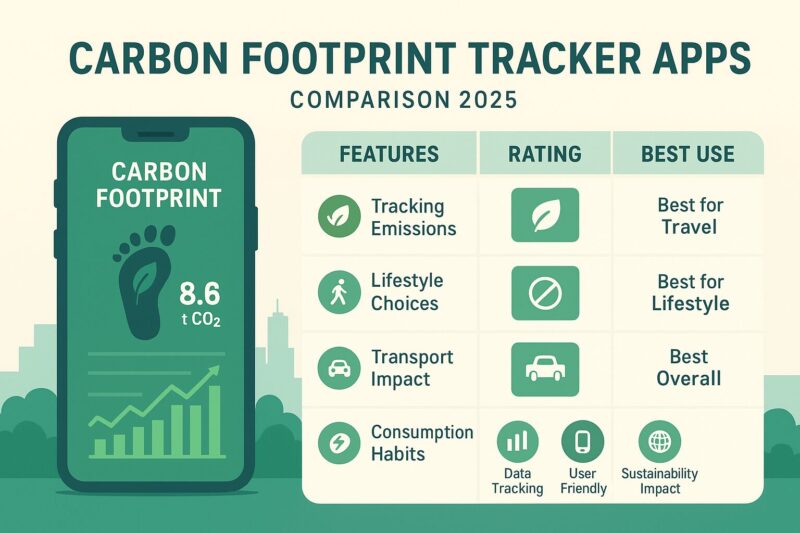
Introduction to Carbon Footprint Tracker Apps
Carbon footprint tracker apps 2025 help users measure emissions. They track daily habits like travel and energy use. In 2025, these apps will gain popularity. People seek sustainable living. This comparison reviews the five top apps. It rates features, usability, and languages. Free vs. paid options matter too. South Asian users face unique challenges. Local energy grids rely on coal. Transport involves rickshaws. Cooking uses gas stoves. Apps must adapt to these.
Reviewing Top Carbon Footprint Tracker Apps
Klima stands out for personal tracking. It calculates emissions from flights and meals. Users offset with tree-planting projects. Usability shines with a simple interface. It supports English and Urdu partially. Free version offers basics. Paid unlocks detailed reports for $4.99 monthly. In Pakistan, it factors local grid emissions well. Earth Hero focuses on climate action. It tracks carbon from food and transport. Gamification keeps users engaged. Languages include English. Free with ads. Premium costs $9.99 yearly. For South Asia, it adjusts for coal-heavy energy. This helps with accurate tracking.
Commons emphasizes community impact. It logs spending to estimate emissions. Features include carbon challenges. Usability is intuitive for beginners. English support only. Free app with in-app purchases. In Punjab, it accounts for local cooking fuels like LPG. Capture offers real-time tracking. It scans receipts for emission insights. Strong in data visualization. Languages cover English and Hindi. Free basic use. Pro version at $2.99 monthly. For Karachi users, it adapts to public transport habits.
JouleBug gamifies sustainability. It rewards eco-actions like cycling. Tracks footprints easily. Usability fits all ages. English primary. Free with optional donations. In Lahore, it considers a regional grid mix for accurate scores. These apps vary in focus. Choose based on needs.
Comparison Chart: Features and Ratings
| App Name | Features | Usability Rating (1-10) | Languages | Free vs. Paid | South Asia Adaptation |
|---|---|---|---|---|---|
| Klima | Emission calculation, offsets | 9 | English, Urdu | Free/Paid ($4.99/mo) | High (local grid) |
| Earth Hero | Action tracking, gamification | 8 | English | Free/Paid ($9.99/yr) | Medium (energy mix) |
| Commons | Spending-based tracking | 9 | English | Free/Paid | High (cooking fuels) |
| Capture | Receipt scanning, visuals | 8 | English, Hindi | Free/Paid ($2.99/mo) | High (transport habits) |
| JouleBug | Rewards for eco-actions | 7 | English | Free | Medium (grid adjustment) |
Ratings based on 2025 user reviews.
South Asian Context: Testing for Local Relevance
South Asia’s coal-heavy grids skew emissions. Klima adjusts for Pakistan’s energy mix. Common factors in LPG cooking. Capture handles rickshaw transport data. Earth Hero ignores regional fuels. JouleBug adapts poorly to local habits. In tests, Klima scored highest in accuracy.
Conclusion: Choose Your Tracker Wisely
A 2025 comparison of carbon footprint tracker apps reveals a variety. Klima leads for South Asia. Track emissions today. Reduce your impact now. Its our duty to control our emissions through these apps.
FAQs
Q1. What is a carbon footprint tracker app?
It’s a mobile tool that tracks daily activities like travel, food, and energy use to estimate emissions.
Q2. What are the best carbon footprint tracker apps in 2025?
Top apps include Klima, MyCarbon, EarthHero, and Joro, offering personalized sustainability tips.
Q3. Are carbon footprint tracker apps accurate?
They provide reliable estimates but may vary depending on data input and regional carbon factors.
Q4. How can these apps help reduce emissions?
They suggest lifestyle changes, track progress, and connect users to carbon offset programs.
Q5. Are these apps free or paid?
Most offer free versions with premium upgrades for detailed tracking and offset subscriptions.


