

Imagine waking up to a world where the sun is a faint orange disk, your eyes burn before breakfast, and every breath feels like inhaling fire. That’s the grim reality for millions in Lahore right now. As 2025’s winter smog surges to record highs. Lahore, Delhi, and Karachi smog episodes are trending regionally and globally. They are fueled by crop burning, coal power, vehicle emissions, and stalled cross-border action. This post unpacks the crisis with fresh data, causes, health tolls, and solutions, empowering residents, researchers, and policymakers to demand change.
Peak AQI Data: A Visual Crisis
Lahore hit AQI peaks of 509-533 in November 2025, topping global pollution charts. While Delhi reached 508 and Karachi hovered at 182-200. All “hazardous” per WHO standards. The bar chart below compares average peak levels during Nov-Dec episodes, revealing Lahore’s extreme exposure
| City | Peak AQI (Nov-Dec 2025) | PM2.5 (μg/m³, times WHO limit) | Duration (days >300 AQI) |
|---|---|---|---|
| Lahore | 509-533 | 102 annual avg (20x WHO) | 120+ |
| Delhi | 446-508 | High from vehicles (45% stubble drop irrelevant) | 120 |
| Karachi | 182-200 | Vehicular dominant | 120 |
Table 1: This table draws from IQAir and AFP analyses, showing a year-round escalation despite seasonal peaks.
Smog from across the border worsens air quality in Pakistan, with polluted winds from India amplifying Punjab’s haze.
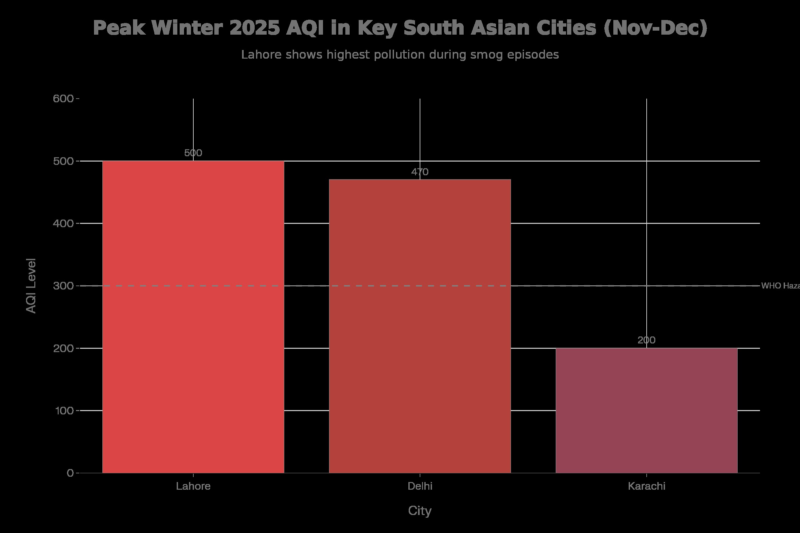
Peak AQI readings during the 2025 winter smog crisis, highlighting hazardous levels.
Pakistan / South Asia Winter Smog Crisis 2025 stems from intertwined sources:
stubble burning in Punjab/Haryana (up to 45% in Delhi), coal-fired plants in NCR/Punjab, and vehicles on Euro II fuel emitting unchecked PM2.5. Winter inversions trap pollutants, starting episodes a month early in October 2024-2025.
| Emissions Source | Contribution (% to PM2.5) | Environmental/Health Impacts |
|---|---|---|
| Crop Residue Burning | 30-45% | Respiratory diseases (e.g., 256K annual deaths PK); cross-border haze |
| Coal Power Plants | 20-25% | Acid rain, ecosystem damage; AQI spikes to 533 |
| Vehicle Emissions | 35-45% (Lahore/Delhi) | Eye irritation, child asthma; 120+ hazardous days |
| Industrial Processes | 10-15% | Soil/water contamination; economic losses in billions |
| Biomass Cooking | 5-10% | Indoor air pollution; vulnerable populations hardest hit |
- Crop burning:
- Post-harvest fires release massive particulates despite anti-burning drives.
- Coal power & industry:
- Unregulated emissions peak in stagnant air.
- Vehicles:
- Pakistan’s top polluter; Lahore’s motorcycles/rickshaws exacerbat. Lahore’s toxic winters reshape life, with blurred headlights and health crises.
- Health and Economic Toll
- Over 256,000 annual deaths in Pakistan from air pollution rival tobacco/diet risks. 2025 saw stinging eyes, respiratory surges, and school closures as AQI hit 533. Economically, factory slowdowns and healthcare costs strain billions, hitting vulnerable groups hardest.
| Emissions Source | Contribution (% to PM2.5) | Environmental/Health Impacts |
|---|---|---|
| Crop Residue Burning | 30-45% | Respiratory diseases (e.g., 256K annual deaths PK); cross-border haze |
| Coal Power Plants | 20-25% | Acid rain, ecosystem damage; AQI spikes to 533 |
| Vehicle Emissions | 35-45% (Lahore/Delhi) | Eye irritation, child asthma; 120+ hazardous days |
| Industrial Processes | 10-15% | Soil/water contamination; economic losses in billions |
| Biomass Cooking | 5-10% | Indoor air pollution; vulnerable populations hardest hit |
Calls for Cross-Border Action
Lahore, Delhi, Karachi smog episodes demand regional pacts.India-Pakistan coordination on winds carrying haze. Punjab’s sprinkling/arrests are reactive; experts urge emission standards, renewables, and clean transport.
Take action:
Monitor IQAir, advocate for Euro V fuel, support biochar stubble alternatives in your research
Related Blogs
Most Polluted Cities of 2025 Face Toxic Collapse
Unveiling the Hidden Dangers of Sahiwal Coal Plant
